Engine Sealing Trends: Meeting High-Temperature and High-Speed Demands in Modern Engines
As emission standards become stricter and fuel efficiency remains a priority, internal combustion engines continue to evolve. Technologies such as turbocharging, downsizing, and advanced combustion control help improve engine performance, but they also introduce new challenges for sealing components.
Higher local temperatures, frequent operating cycles, and changing mechanical loads can affect how seals maintain oil control over time. While engine seals are relatively small components, their performance can influence lubricant consumption, mechanical reliability, and long-term engine operation.
For modern engine sealing technology, the central challenge is no longer simply preventing leakage. It is maintaining consistent sealing performance throughout demanding operating conditions and extended service periods.
How Do Emission Regulations and Engine Efficiency Affect Sealing Requirements?
Emission regulations establish limits and durability expectations for vehicles rather than prescribing specific sealing materials. Nevertheless, these requirements influence engine development and the performance expected from individual components.
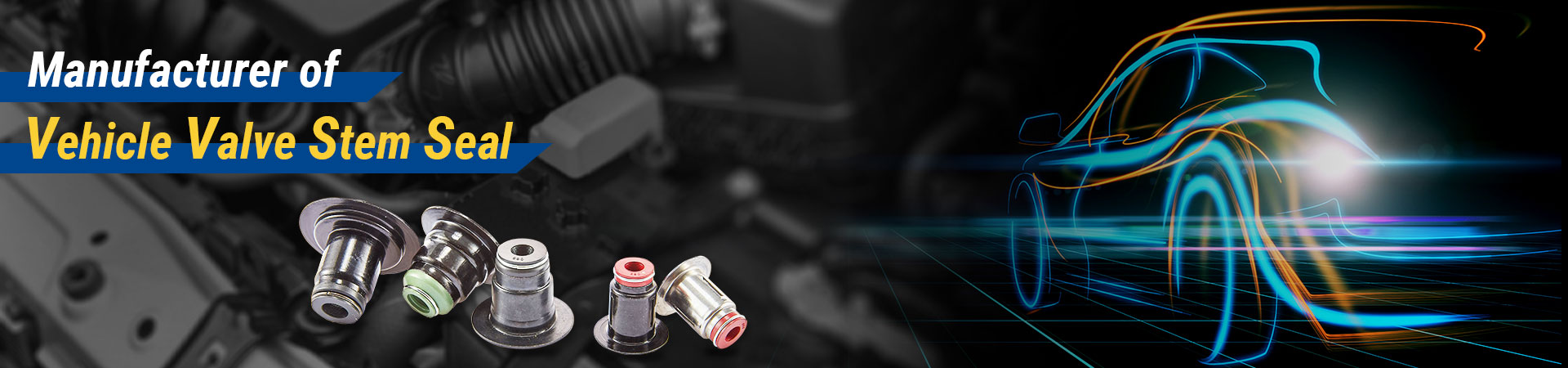
One important consideration is oil consumption. Excessive lubricant entering the combustion chamber can contribute to deposits, particulate emissions, and increased oil consumption. Valve stem seals regulate oil passing between the valve stem and guide, helping maintain the lubrication necessary for movement without allowing excessive oil migration.
Engine efficiency improvements also create design trade-offs. Reducing mechanical friction can improve efficiency, but sealing contact must remain sufficient to control lubricant movement. Excessively reducing sealing force may compromise oil control, while excessive contact pressure can increase friction and wear.
As a result, modern engine seals must balance lubricant control, contact stability, and durability rather than optimize any single characteristic independently.
What Challenges Do Higher Temperatures and Engine Speeds Create?
Modern engines may operate under demanding thermal and mechanical conditions, particularly in turbocharged or compact engine configurations. However, the actual stress experienced by a seal depends on its installation location, surrounding components, and operating environment.
Three challenges are particularly important:
Thermal Aging and Loss of Elasticity
Prolonged exposure to elevated temperatures can change rubber hardness, elasticity, and compression set. As these properties change, the seal may become less capable of maintaining its intended contact with the mating surface.
Repeated heating and cooling can further influence dimensional stability. Consequently, a material's maximum temperature rating alone cannot determine whether it will maintain reliable performance throughout its service life.
Increased Movement and Contact Wear
Higher engine speeds increase the frequency of valve movement and the rotational speed of associated shafts. These operating conditions can influence contact wear, lubrication behavior, and frictional heating.
Valve stem seals and rotary shaft seals experience different types of movement, so their sealing structures must be evaluated according to their specific applications. A design suitable for reciprocating motion cannot automatically be assumed suitable for high-speed rotation.
Long-Term Performance Under Changing Loads
Engines frequently transition between startup, acceleration, sustained operation, and shutdown. These changes affect temperature, lubrication, and mechanical conditions.
Seals must accommodate these variations without excessive deformation or loss of sealing contact. Long-term reliability therefore depends on how the complete sealing structure responds to repeated operating cycles.
Which Sealing Characteristics Matter Most in Modern Engine Design?
The following table connects major engine development trends with their corresponding sealing requirements.
| Engine trend | Potential sealing challenge | Key requirement |
| Higher local temperatures | Rubber hardening and loss of elasticity | Thermal aging resistance |
| Higher operating speeds | Increased movement frequency and contact wear | Suitable lip geometry and wear resistance |
| Tighter emissions control | Excessive oil entering the combustion chamber | Consistent lubricant control |
| Longer service intervals | Gradual deterioration of material properties | Long-term dimensional and contact stability |
| Compact engine packaging | Limited installation space and localized heat exposure | Precise dimensions and appropriate material selection |
These requirements demonstrate why sealing performance cannot be determined by material selection alone. Seal geometry, manufacturing consistency, and application conditions must also be considered.
How Can Sealing Performance Be Validated for Modern Engine Requirements?
As engine operating conditions become more demanding, evaluating sealing performance requires more than checking basic dimensions or material specifications. The following factors help determine whether a seal can maintain consistent performance over its intended service life.
Operating temperature and duration: Identify normal and peak temperatures at the seal location, including how long the component remains exposed to elevated temperatures.
Lubricant compatibility: Confirm that the selected rubber compound is compatible with the intended engine oil and its additives. Changes in swelling, hardness, or elasticity can affect sealing performance.
Movement and installation conditions: Consider valve stem dimensions, shaft speed where applicable, surface finish, installation tolerances, and expected mechanical movement.
Service-life expectations: Evaluate whether material aging, dimensional changes, and contact wear could affect sealing performance over the intended operating period.
Material aging and oil immersion tests can help assess compound behavior, while dimensional inspection and application-specific performance testing provide additional evidence of sealing reliability. These evaluations are particularly important when higher temperatures, increased operating speeds, or longer service intervals place additional demands on sealing components.
How AOK Supports Modern Engine Sealing Requirements
At AOK, we specialize in automotive valve stem seals and customized rubber sealing components. With more than 500 valve stem seal specifications, we support different engine applications while providing customized solutions for specific dimensional and operating requirements.
To address demanding engine conditions, we work with materials such as NBR, ACM, and FKM, considering temperature resistance, oil compatibility, and long-term material stability. Our in-house tooling and rubber molding capabilities help maintain consistent sealing geometry and manufacturing precision.
Quality control is also an important part of our production process. Through dimensional inspection, automated optical inspection, and material testing, we monitor product consistency and identify potential manufacturing defects.
By integrating material selection, tooling development, manufacturing, and quality inspection, we support reliable sealing performance across different engine applications. Contact AOK to discuss your sealing requirements.