Why Do IATF 16949 and ISO 9001 Matter in Automotive Parts Manufacturing?
The automotive components industry attaches high importance to IATF 16949 (Automotive Quality Management System Standard) and ISO 9001 (Quality Management System Standard). These standards support the automotive supply chain's rigorous expectations for defect prevention, consistent quality, and reliable production.
Their importance can be examined through three key areas: manufacturing risk and delivery stability, OEM supplier qualification, and overseas customer confidence.
The Critical Impact of Quality Systems on "On-Time Delivery" and "Risk Control"
In precision manufacturing and component supply, quality issues are often the biggest culprits behind delivery delays and uncontrolled costs. Through standardized processes, IATF and ISO systems fundamentally reshape in-house manufacturing operations:
Prevention Over Cure: Risk Control (e.g., APQP and FMEA)
Advanced Product Quality Planning (APQP): Cross-functional team collaboration is introduced early in product development to fully align mold design, material characteristics (such as rubber polymer formulations or metal properties), tolerance ranges, and process parameters. This helps reduce the need for mold modifications after mass production begins.
Failure Mode and Effects Analysis (FMEA): Potential failure points during production and usage (e.g., molding flash or dimensional variation) are systematically anticipated. Error-proofing and preventive measures are planned prior to mass production to minimize Parts Per Million (PPM) defect rates, avoiding rework or remanufacturing caused by quality issues and directly protecting production schedules.
Standardization and Preventive Equipment Maintenance Support Delivery Stability
Statistical Process Control (SPC): Critical dimensions and physical characteristics are monitored in real time using statistical process control. Machine parameters are adjusted immediately upon detecting data drift trends, rather than waiting for products to go out of tolerance before shutting down the line.
Preventive Maintenance (PM): IATF strictly requires planned maintenance and spare parts management for critical equipment (e.g., automated grinders, molding machines, inspection instruments). This effectively prevents line shutdowns caused by sudden mechanical failures, ensuring high on-time delivery rates.
Supply Chain Traceability: If raw material or batch anomalies occur, barcode and lot number systems can support rapid traceability to specific raw material batches and production records. This helps identify affected products and supports targeted containment measures, reducing the risk of wider production disruptions.
Why Do OEM Customers Treat Certification as a "Threshold for Cooperation"?
Many original equipment manufacturers (OEMs) and Tier 1 suppliers rely on tightly coordinated production schedules, including Just-In-Time (JIT) and, where applicable, Just-In-Sequence (JIS) systems.
Devastating Cost of Failure: A defective automotive component, including a small oil seal or gasket, can lead to product malfunctions, warranty claims, or assembly disruptions. In severe cases, safety-related defects may result in recalls and substantial financial or reputational damage.
Audit Mechanism (QMS as a Baseline): Many OEMs and Tier 1 suppliers require IATF 16949 certification as part of their supplier qualification process. Depending on the customer and sourcing arrangement, suppliers may also be evaluated against ISO 9001, customer-specific quality requirements, and additional audit criteria. Meeting the applicable requirements can be essential for participating in RFQ processes and obtaining supplier approval.
Mitigating Overseas Customers' Concerns About "Supply Stability"
For multinational B2B customers, the biggest pain points in cross-border procurement are information asymmetry and off-site manufacturing uncertainties. Overseas buyers often have the following concerns:
- Can a factory far overseas maintain consistent quality over the long term?
- Can the supplier maintain consistent quality when management or shop-floor technical personnel change?
- When anomalies occur, does the vendor have the capability to conduct scientific 8D root-cause analyses and corrective action reporting?
A Universal International Language of Quality
Building a Foundation of Trust: IATF 16949 and ISO 9001 provide a globally recognized "quality management language." When overseas customers see these certifications, it confirms that the manufacturer possesses standardized operating procedures, strict corrective/preventive action protocols, and a continuous improvement culture.
Evaluating Long-Term Supply Reliability: Beyond certification, overseas buyers should also evaluate a supplier's production records, delivery performance, traceability practices, and corrective action capabilities. These factors provide practical evidence of whether the manufacturer can maintain consistent quality and respond effectively to production or supply disruptions.
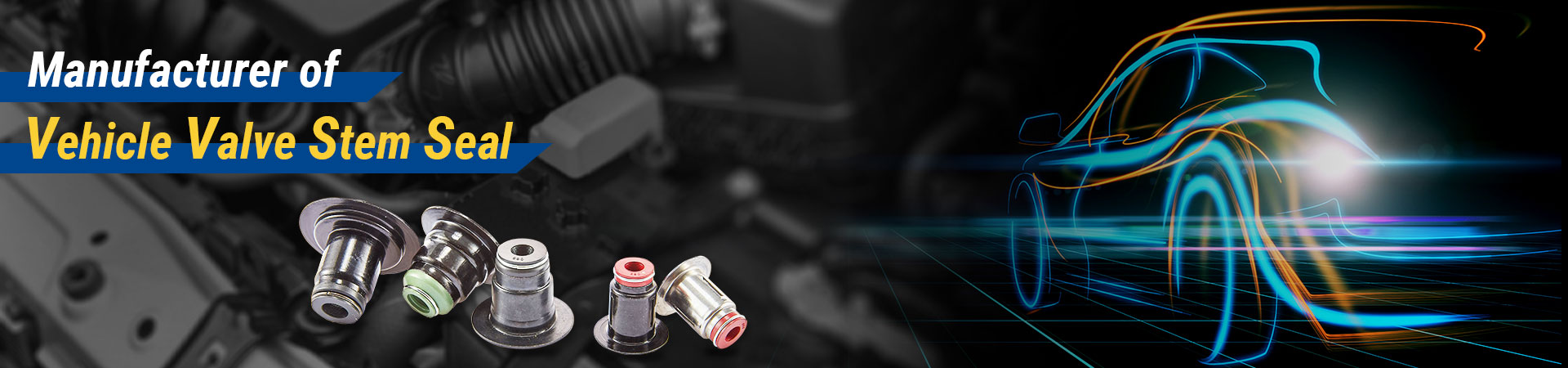
For automotive sealing components such as valve stem seals, manufacturing consistency and quality control are important considerations in supplier evaluation. AOK reports holding IATF 16949:2016 and ISO 9001:2015 certifications and applies quality management practices, including FMEA and Control Plans, to support its manufacturing operations. These capabilities provide a relevant foundation for customers evaluating AOK as an automotive sealing component supplier.