Why OEM Customers Prioritize Tooling Precision and Process Capability in Valve Stem Seals
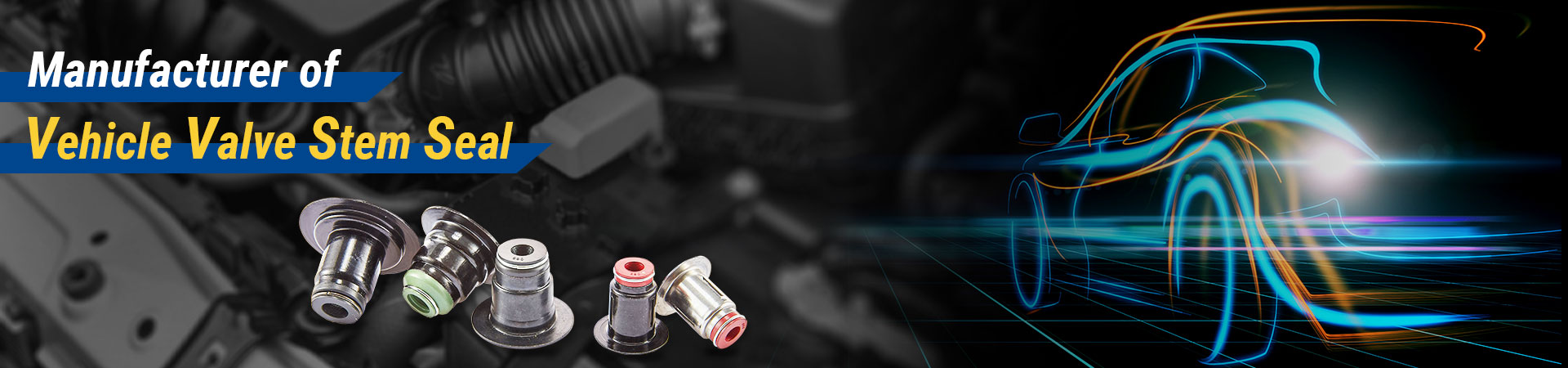
In internal combustion engines, the valve stem seals regulate the amount of engine oil reaching the valve stem and guide while limiting excess oil from entering the combustion chamber. For OEM customers, selecting a valve stem seal supplier involves more than comparing unit prices. Tooling precision and manufacturing process capability are critical because they affect sealing performance, dimensional consistency, and the ability to meet quality requirements throughout mass production.
1. Tooling Precision: The Lifeline of Micron-Level Sealing Lips
The sealing lip of a valve stem seal must maintain controlled oil lubrication under repeated valve stem movement and elevated operating temperatures. Even a deviation of a few microns (μm) can trigger premature wear or oil leakage.
- Parting Line & Flash Control: High-precision mold machining guarantees ultra-tight parting line alignment, eliminating parting line flash. Flash and parting line burrs are leading root causes of early abrasive wear and micro-leaks.
- Shrinkage Compensation Calculation: Elastomers shrink after vulcanization, with shrinkage rates varying significantly across FKM, ACM, and NBR. An experienced tooling team accurately compensates for thermal contraction during design, keeping dimensions strictly within fine tolerances.
- Metal Insert Positioning Accuracy: For valve stem seals with metal cases, accurate positioning of the metal inserts is essential. Tolerance stack-up in tooling core pins can affect concentricity, potentially resulting in uneven press-fit forces and misaligned lip contact.
2. Process Capability: The Backbone of High-Volume Consistency
OEMs order in massive production volumes, meaning prototype approval does not equal scalable manufacturing capability. Robust process control helps maintain consistent quality across large production volumes and reduces the risk of defects.
- Compound Mixing & Rheological Control:Every batch of rubber undergoes rheometer testing to verify curing kinetics (, ), preventing under-curing or scorch variations.
- Surface Treatment & Bonding Integrity: Degreasing, phosphating, and adhesive coat thickness on metal cases are tightly monitored, securing 100% rubber-tearing adhesive bonds under high-temperature oil immersion.
- Vacuum Molding & Poka-Yoke: High-precision vacuum injection and compression molding help reduce trapped air and voids, while automated optical inspection (AOI) sorting systems help detect missing springs and visible lip defects before products reach assembly lines.
3. The Supplier Value of In-House Tooling & Development
Partnering with a manufacturer featuring integrated in-house mold design and fabrication provides concrete advantages:
- Faster NPI Cycles: Seamless internal workflow from DFM analysis to pilot tooling drastically cuts prototyping lead times.
- Rapid ECN Response: Immediate on-site mold modification accommodates engineering change notices (ECN) without third-party tooling delays.
- Full Tooling Life-Cycle Maintenance: Systematic preventive mold maintenance ensures strict dimensional consistency from the 10,000th to the 10,000,000th unit.
AOK's In-House Tooling and Manufacturing Capabilities
At AOK, in-house mold design and manufacturing capabilities support the development of valve stem seals for different customer requirements. Through our R&D and OEM/ODM services, AOK assists customers with material selection, mold development, and customized sealing solutions. Its manufacturing and inspection equipment also supports dimensional verification and production quality control.
For OEM customers evaluating valve stem seal suppliers, AOK welcomes inquiries regarding product specifications, tooling development, and manufacturing requirements.