
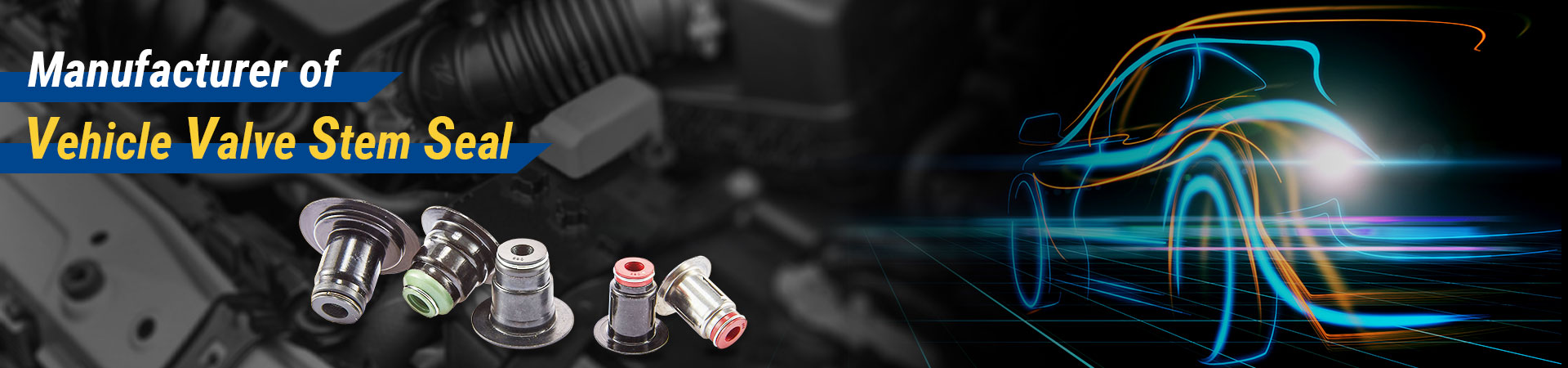
Positive vs Umbrella vs Metal-Clad Valve Stem Seals: Key Differences and Applications
Valve stem seals play a critical role in precise oil control within an engine. Their job is to prevent excessive oil from entering the combustion chamber—which can lead to oil burning, carbon buildup, and higher emissions—while still maintaining a thin lubricating oil film on the valve stem and valve guide.
Depending on engine design, operating speed, temperature, and durability requirements, manufacturers generally use three main types of valve stem seals: Umbrella, Positive, and Metal-Clad. Each design offers different levels of oil control, structural stability, and suitability for specific applications.
Understanding the Three Main Valve Stem Seal Designs
1. Umbrella Valve Stem Seals
Structure and Operating Principle
The umbrella valve stem seal is the most traditional legacy design. As its name suggests, it is shaped like a small umbrella and is installed directly on the valve stem, moving up and down together with the valve during operation.
Unlike positive or metal-clad seals, the umbrella seal is not fixed to the top of the valve guide. Instead, it acts like an umbrella, "shedding" or "deflecting" the large amounts of oil flung from the camshaft away from the valve stem, preventing oil from running directly down into the guide.
Characteristics and Applications
- Advantages: Extremely simple structure, low manufacturing cost, and very easy installation.
- Disadvantages: Limited oil control precision compared with stationary seal designs. Because the seal moves with the valve, its oil deflection performance becomes less stable at high RPM, making it less suitable for modern engines with strict emissions and oil consumption requirements.
- Primary Applications: Older low-RPM engines, vintage American large-displacement vehicles (such as classic V8 engines), or industrial machinery with less stringent oil control requirements.
2. Positive Valve Stem Seals
Structure and Operating Principle
The positive seal is one of the standard sealing solutions used in modern engines. Unlike an umbrella seal, it is firmly locked or pressed onto the top of the valve guide and remains stationary.
As the valve stem moves in a high-speed reciprocating motion inside the seal, the internal sealing lip wipes the valve stem like a windshield wiper. Typically, a garter spring is wrapped around the exterior of the sealing lip to ensure that the rubber maintains stable tension even after long-term wear and high-temperature aging.
Characteristics and Applications
- Advantages: Extremely precise oil metering. Regardless of how fast the valve operates, it ensures that only a microscopic (micron-level) oil film passes through for lubrication, significantly reducing carbon emissions and oil consumption.
- Disadvantages: Requires a more demanding installation process (necessitating specialized press-fit tools). If the outer diameter of the top of the valve guide does not match the seal, the seal is prone to coming loose during operation.
- Primary Applications: Modern passenger car engines, high-RPM engines, and multi-valve engine designs.
3. Metal-Clad Valve Stem Seals
Structure and Operating Principle
The metal-clad seal is often regarded as a more robust evolution of the positive seal design. It features a precision metal shell bonded to the outer diameter of the elastomer sealing body, providing greater structural rigidity and retention strength.
Like the positive seal, the metal-clad design is installed on top of the valve guide and remains stationary during operation. It is typically secured through an interference fit between the metal shell and the valve guide. In some designs, an integrated washer or flange is added at the base so that the valve spring can seat directly on the seal assembly. This structure helps lock the seal more securely in place and reduces the risk of movement or dislodgement during high-speed operation.
Characteristics and Applications
- Advantages:
- High Structural Strength: The metal shell provides excellent rigidity, withstanding high temperatures and high pressures.
- Anti-Dislodgement: Through the metal interference fit or the integrated spring-seat design, it help prevent the risk of conventional rubber positive seals "vibrating loose" or backing off from the top of the guide.
- Superior Heat Dissipation: The metal shell helps conduct frictional heat away to the valve guide for dissipation.
- Disadvantages: It incurs the highest tooling development and production costs. It demands exceptionally strict requirements for material bonding (such as bonding Viton/FKM fluoroelastomer to the metal shell) and machining precision.
- Primary Applications: Modern high-load turbocharged engines, racing engines, high-performance heavy-duty diesels, and other environments demanding extreme reliability.
Comparison of Umbrella, Positive, and Metal-Clad Valve Stem Seals
| Features / Designs | Umbrella Seal | Positive Seal | Metal-Clad Seal |
| Installation Position | On the valve stem (moves with the valve) |
On top of the valve guide (remains stationary) |
On top of the valve guide (interference fit, stationary) |
| Garter Spring | Usually not used none | Yes | Yes |
| Oil Metering Precision | Fair (Waterproof principle only) | Excellent (lip-wiping mechanism) | Outstanding (high-rigidity, highly stable lip) |
| Anti-Dislodgement Capability | N/A (dynamic/moving design) | Moderate (relies on rubber tension) | Exceptional (secured by metal interference fit or spring downforce) |
| Manufacturing Cost | Low | Moderate | Highest |
How to Choose the Right Valve Stem Seal
Selecting the right valve stem seal depends on several factors, including engine speed, operating temperature, valve guide design, emissions requirements, and expected service life.
- Umbrella seals are typically suitable for older or low-speed engines where simple structure and low cost are the main priorities.
- Positive seals are preferred for most modern passenger vehicle engines because they offer precise oil control and consistent sealing performance.
- Metal-clad seals are ideal for high-load, turbocharged, racing, or heavy-duty applications where retention strength, heat resistance, and long-term durability are critical.
Umbrella, positive, and metal-clad valve stem seals each serve different engine requirements. Umbrella seals provide a simple and economical solution for older engine designs, positive seals are the standard choice for modern engines requiring precise oil control, and metal-clad seals offer the highest level of retention strength and durability for demanding operating conditions.
You May Be Interested In:
How to Choose the Right Automotive Oil Seal
Need Help Choosing the Right Valve Stem Seal?
AOK specializes in manufacturing valve stem seals and bonded seals for a wide range of automotive and industrial applications. If you need help selecting the right seal design, material, or dimensions for your engine platform, feel free to contact our team for technical support and product recommendations.