The Hidden Role of Oil Seals in Engine And Transmission Reliability
Oil seals play a critical role in keeping automotive engines and transmissions stable, efficient, and durable. Their job is not limited to stopping visible leaks. In actual operation, they help retain lubricants, prevent dirt and moisture from entering sensitive assemblies, reduce friction-related wear, and protect moving parts under continuous heat and motion. When sealing performance declines, the effects can spread quickly through the system, leading to fluid loss, unstable lubrication, faster wear, contamination, overheating, and shortened component life. In modern automotive applications, oil seals are essential to both performance and long-term reliability.
Why Oil Seals Matter Across The Powertrain
Automotive engines and transmissions both depend on controlled lubrication. Oil and transmission fluid must stay where they are needed, in the right amount, for the right duration. Oil seals make this possible by creating stable sealing contact between fixed housings and moving parts such as shafts, guides, and rotating assemblies.
When a seal performs properly, it helps the system maintain:
- consistent lubrication
- reduced contamination risk
- lower wear on contact surfaces
- improved operating stability
- longer service life of critical components
Because these functions are directly connected to durability, oil seals should be viewed as working components rather than passive rubber parts.
The Role of Oil Seals in Automotive Engines
Inside an engine, oil seals help manage lubrication in areas exposed to high temperature, oil splash, reciprocating movement, and constant thermal cycling. Their role is to keep oil within the intended path while also protecting sensitive contact zones from excessive oil entry or external contamination.
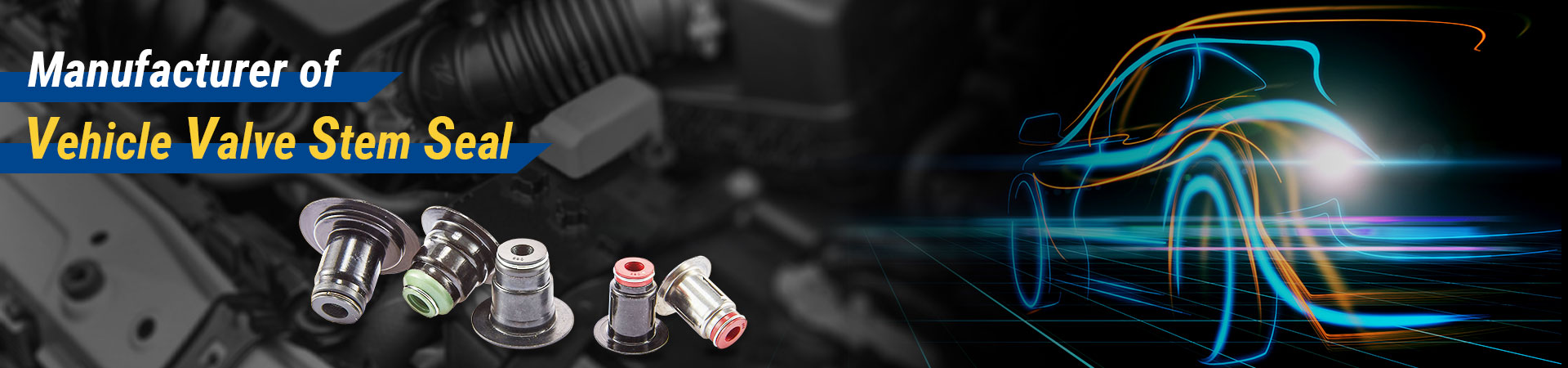
One of the most important examples is the valve stem seal. A valve stem seal regulates the amount of oil that passes along the valve stem into the valve guide area. This balance is essential. If too much oil enters, it can increase oil consumption, create carbon deposits, and affect combustion quality. If too little oil reaches the contact area, wear between the valve stem and guide can increase.
A reliable valve stem seal therefore helps support:
Controlled Oil Metering
It allows the correct amount of lubrication while preventing excess oil from entering the combustion chamber.
Reduced Wear
It helps reduce friction between the valve stem and guide, protecting both parts over repeated operating cycles.
Heat Resistance
It must remain stable in elevated temperatures without hardening too quickly or losing sealing force.
This is why valve stem seal performance is closely tied to engine cleanliness, oil control, and service life.
The Role of Oil Seals in Transmissions
In transmissions, oil seals have a different but equally important function. They help retain transmission fluid around rotating shafts and internal components while preventing contaminants from entering the system. Because transmissions rely on stable fluid conditions for lubrication, cooling, and smooth power transfer, sealing failure can affect much more than fluid retention alone.
When transmission oil seals lose effectiveness, common results may include fluid leakage, reduced lubrication stability, higher friction, contamination of internal parts, and faster wear of bearings, shafts, or related components. In severe cases, poor sealing can contribute to overheating and reduced transmission efficiency.
Compared with many engine sealing points, transmission seals often face:
- continuous shaft rotation
- long service intervals
- fluid exposure over extended periods
- combined heat and friction during repeated use
For this reason, transmission oil seals must maintain lip stability, wear resistance, and fluid compatibility over time, especially in applications where durability and consistent performance are expected.
What Conditions Challenge Oil Seals Most
Oil seals in engines and transmissions are usually exposed to more than one form of stress at the same time. High temperature, oil chemistry, friction, and operating duration work together to determine whether a seal will remain reliable.
The table below outlines the main conditions that affect sealing performance.
| Operating Condition | Why It Matters | What A Reliable Seal Must Provide |
| High Temperature | Heat accelerates aging and reduces elasticity | Stable sealing force and shape retention |
| Oil Exposure | Oils and additives may affect rubber compounds | Resistance to swelling, softening, and degradation |
| Wear And Friction | Constant movement can damage sealing lips over time | Durable contact surfaces and abrasion resistance |
| Long Service Cycles | Performance must remain stable over extended use | Reliable long-term sealing consistency |
These factors should always be considered together, because a seal that performs well in one area may still fail if the full operating environment is not taken into account.
Material Selection And Manufacturing Control
Seal reliability depends on both material choice and production quality. A suitable material must match the actual thermal range, oil exposure, motion pattern, and wear requirements of the application. At the same time, stable production quality is needed to ensure that each seal performs consistently after installation.
Tooling precision, molding stability, dimensional control, and rubber-to-metal bonding quality all influence sealing performance. Even small variation can affect lip contact pressure, oil control, and wear rate. In automotive engines and transmissions, where sealing surfaces operate continuously under stress, these details have a direct effect on durability.
How AOK Supports Reliable Sealing Solutions
At AOK, we support demanding automotive sealing applications through integrated development and manufacturing capabilities. Based on the key information presented on our website, our strengths include:
- In-house product design and tooling development
- An R&D team with over 30 years of oil seal industry experience and OEM/ODM support for application-specific requirements
- Close coordination across design, mold, and manufacturing functions
- More than 500 specifications of car valve seals, with continued development of additional models
- Ongoing improvement in equipment, manufacturing management, and professional skills
For applications that must perform reliably under high temperature, oil exposure, and wear conditions, these capabilities help us provide more stable and application-focused sealing solutions. If you would like to explore related products or discuss your requirements, please contact AOK.
Reliable Sealing Supports Long-Term Vehicle Performance
The role of oil seals in automotive engines and transmissions goes far beyond leak prevention. In engines, they help control oil flow, protect contact surfaces, and support efficient operation under heat. In transmissions, they help preserve fluid stability, reduce contamination risk, and protect rotating assemblies during long service cycles. When oil seals are designed and manufactured correctly, they help the entire powertrain operate more cleanly, reliably, and efficiently. That is why long-term automotive performance depends not only on major components, but also on the sealing solutions that protect them every day.