2026 Automotive Sealing Industry Trends: How EVs Are Creating New Demand for Low-Friction Oil Seals
As we move into 2026, one question keeps coming up: how should sealing systems evolve as electric vehicles reshape drivetrain design? From my perspective, the answer is clear. Electrification is not reducing the importance of sealing technology. It is making sealing performance more critical, more specialized, and more application-specific than ever.
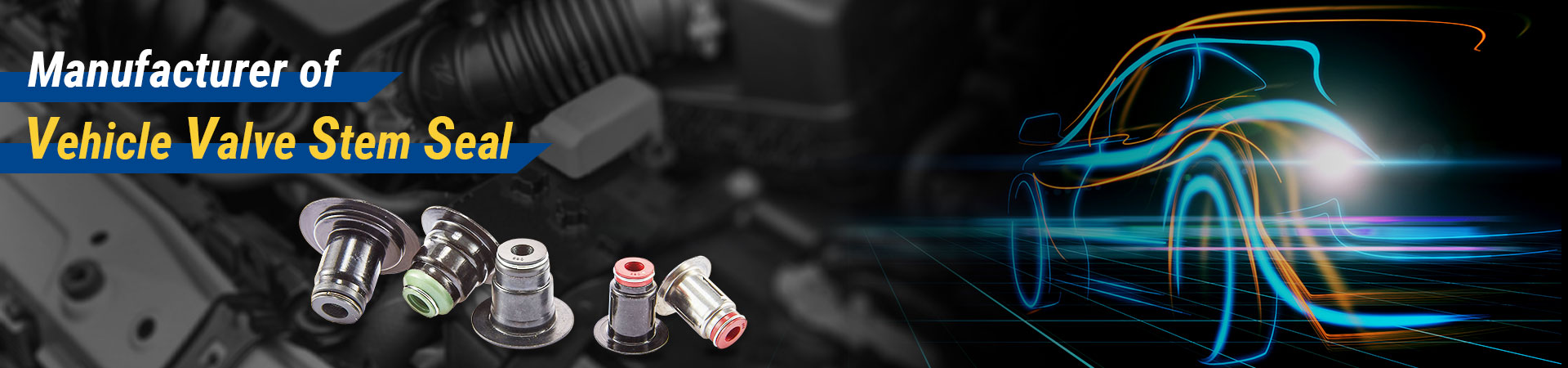
For decades, the industry has focused heavily on internal combustion engine applications such as the automotive valve seal, where oil control, durability, and heat resistance are central to engine performance. But EVs are changing the design environment. Electric motors run at high speed, system architectures are becoming more compact, friction losses matter more, and material performance must now meet new thermal, chemical, and rotational demands. This shift is creating both engineering challenges and business opportunities for seal manufacturers that can adapt early.
Why EVs Are Changing Seal Design Requirements
Many buyers assume EVs use fewer seals simply because they eliminate many engine components. In reality, the demand is not disappearing; it is moving. Instead of focusing only on traditional engine sealing points, engineers now need to consider motor shafts, reduction gear units, e-axles, battery-adjacent systems, cooling loops, and integrated power electronics environments.
This means sealing solutions must increasingly deliver:
- lower friction
- higher rotational stability
- stronger material compatibility
- better thermal aging resistance
- tighter leakage control in compact spaces
In other words, the market is shifting from standard sealing products to precision-engineered sealing systems.
The Biggest Pain Point: High-Speed Electric Motor Operation
One of the biggest differences in EV applications is rotational speed. Electric motors can operate at far higher RPMs than many conventional engine-driven systems. That puts unusual stress on shaft seals and dynamic sealing interfaces.
When rotational speed increases, manufacturers often face several problems:
- lip wear accelerates
- heat builds up faster
- friction losses become more visible
- lubricant retention becomes harder to control
- sealing stability can decline under long-duty cycles
This is why low-friction oil seal design is becoming a major trend for 2026. A seal that performs adequately in a conventional application may not survive or remain efficient in an EV motor-related environment. Geometry, rubber compound choice, spring design, surface finish, and counterface quality all become more important.
Why Low Friction Matters More Than Before
In EV systems, every efficiency gain matters. Lower friction does not just reduce wear; it also helps reduce energy loss, temperature rise, and long-term performance drift. For purchasing teams and engineers, this creates a practical question: how do we balance sealing force with efficiency?
The answer is not simply “use a tighter seal” or “use a softer material.” An effective EV-oriented oil seal needs to balance:
- sufficient contact pressure for leakage control
- reduced drag torque
- material durability at elevated surface speeds
- resistance to lubricant and fluid chemistry
- stable performance across temperature cycles
This is where sealing development becomes more than a commodity purchase. It becomes an engineering decision tied directly to reliability, efficiency, and service life.
What 2026 Buyers Should Evaluate in a Seal Supplier
As EV platforms mature, I believe buyers will increasingly evaluate sealing partners using a broader set of criteria than price alone. The most important questions include the following:
| Evaluation Area | What Buyers Should Ask |
| Speed Capability | Can the seal handle high-speed electric motor conditions? |
| Friction Performance | Has drag torque or low-friction behavior been considered in design? |
| Material Selection | Is the compound suitable for heat, lubricant chemistry, and aging? |
| Dimensional Precision | Can the supplier maintain consistency for mass production? |
| Custom Development | Can the supplier adjust design for OEM or application-specific needs? |
| Validation Support | Can the supplier discuss test logic, failure modes, and optimization? |
This table matters because many sealing failures do not come from one obvious defect. They come from a mismatch between application conditions and seal design assumptions.
What EV Trends Mean for Traditional Products Like the Automotive Valve Seal
Some buyers may wonder whether traditional products such as the automotive valve seal will become less important as EV adoption grows. My view is that the role of the automotive valve seal remains highly relevant, especially in hybrid vehicles, internal combustion platforms that will remain in service for years, and global aftermarket demand.
More importantly, the technical discipline developed in automotive valve seal manufacturing—precision oil control, low wear, material optimization, and dimensional stability—provides a strong foundation for next-generation sealing applications. In that sense, the experience behind an automotive valve seal is not outdated. It is transferable. The same engineering mindset is increasingly valuable in EV-era sealing development.
According to the International Energy Agency’s Global EV Outlook 2025, electric vehicle sales are continuing to expand across diverse markets, while industry attention is also shifting toward battery demand, charging infrastructure, manufacturing, trade, and total cost of ownership. This suggests that seal manufacturers should prepare for a broader mix of conventional, hybrid, and electrified applications as platform requirements continue to evolve.
The Opportunity for Seal Manufacturers in 2026
For seal manufacturers, 2026 will not simply be about selling more parts. It will be about solving harder problems. Customers increasingly need support with material choice, friction optimization, durability improvement, and custom development for changing drivetrain architectures. The suppliers that can respond with engineering depth, application understanding, and flexible OEM/ODM support will be in the strongest position.
At AOK, we see this shift as a practical opportunity. Our long experience in sealing products, including automotive valve seal development, combined with our OEM/ODM capability, material selection support, integrated R&D, and in-house tooling experience, allows us to work more closely with customers as sealing requirements evolve. If you are reviewing sealing options for current engine platforms, hybrid systems, or next-generation electrified applications, we invite you to explore more of our website and product capabilities.
If you are looking for a reliable sealing partner for your next project, please feel free to contact AOK. We are always ready to discuss your application needs and help you identify the right sealing solution.